




Blog
Everything You Need to Know Before Buying Bricks and Blocks

Bricks & Blocks:
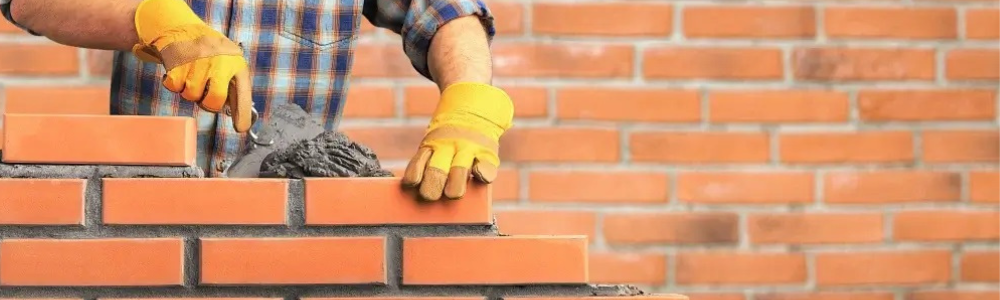
Brick is a small block of burnt clay, which is commonly used for building walls and pavements. They are the first alternative to stones in construction and people started using bricks since ancient times about 5,000 years ago, from the Indus Valley Civilization itself.
There are different types in bricks like Red bricks, Fly ash bricks, Autoclaved Aerated Concrete (AAC) Blocks, Concrete Solid Blocks
The sizes of common building bricks are 190x90x90 mm and 190x90x40 mm. The brick size may vary if we include the mortar joints.
Difference between Bricks & Blocks?
Bricks are fired and blocks are not fired, they are chemically cured rather than fired. Blocks are available in different sizes and shapes, while bricks are available only in standard sizes.
Types of Bricks:
Red Bricks
Red bricks are the most traditional and widely used construction material in India. Made from natural clay and kiln-fired, they are known for their durability, strength, and classic appearance. Red bricks are commonly used in residential buildings, government structures, educational institutions, and traditional architecture.
Autoclaved Aerated Concrete (AAC) Blocks
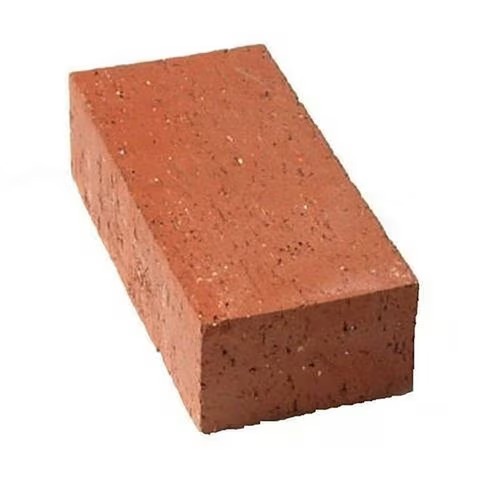
AAC blocks are lightweight, precast building materials manufactured using cement, lime, sand, and aluminum powder. These blocks are cured in an autoclave under high pressure, resulting in excellent strength with reduced weight.
Concrete Solid Blocks
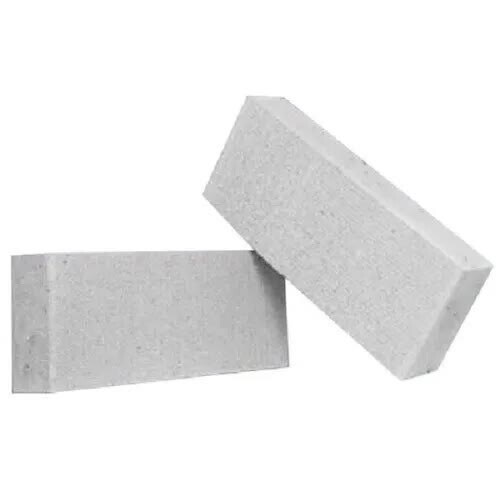
Concrete solid blocks are made using cement, sand, and aggregates, molded and cured to achieve high strength. They are commonly used for both load-bearing and non-load-bearing walls.
Properties of Good Quality Bricks:
- They should be uniform and bright in color.
- They should possess sharp and right-angled corners with plane faces.
- Bricks should be fine, dense, and uniform in texture.
- Good bricks are fire-resistant.
- Crushing Strength should be as high as possible.
- Hollow and Light-weight bricks provide good sound insulation.
- They should have low thermal conductivity.
Testing of Bricks:
- Uniformity in Size: A good brick should have plane surfaces with sharp and right-angled corners.
- Uniformity in Color: A good brick should have a uniform color.
- Structure test: Brick should be free from holes and lumps and has a homogeneous, compact structure.
- Sound test: Sound should not be dull; they should produce a metallic sound, when two bricks are struck against each other.
- Efflorescence test: Bricks should not show white patches when soaked in water for 24 hours, as they indicate the presence of sulphates of calcium, magnesium, potassium, and sodium.
- Absorption test: Water absorption should not be more than 15 percent after immersing in water for 24 hours.
Everything You Need to Know Before Buying Bricks and Blocks
AAC blocks are lightweight, precast building materials manufactured using cement, lime, sand, and aluminum powder. These blocks are cured in an autoclave under high pressure, resulting in excellent strength with reduced weight.
Everything You Need to Know Before Buying Bricks and Blocks
AAC blocks are lightweight, precast building materials manufactured using cement, lime, sand, and aluminum powder. These blocks are cured in an autoclave under high pressure, resulting in excellent strength with reduced weight.